


The harmonic balancer, also known as a crankshaft damper, is a critical engine component designed to reduce crankshaft vibration and improve engine durability. During engine repair, timing service, crankshaft maintenance, or front-end engine work, technicians often need to remove and reinstall the harmonic balancer.
However, removing a harmonic balancer is not a simple task. Because it is usually installed with a tight press fit on the crankshaft, using incorrect removal methods can easily cause damage to:
Crankshaft surface
Harmonic balancer
Timing components
Engine front cover
Sealing areas
Many technicians still use hammers, pry bars, or improvised methods to remove crankshaft pulleys. These methods may create excessive impact force and increase the risk of component damage.
A harmonic balancer puller provides a safer and more professional solution. By applying controlled pulling force directly along the crankshaft axis, the tool allows technicians to remove the harmonic balancer smoothly without damaging surrounding engine components.
At BY (Baiyu Tools), we specialize in manufacturing professional automotive specialty tools, including harmonic balancer pullers, gear pullers, bearing pullers, and engine service tools. Based on years of experience working with repair workshops and tool distributors worldwide, BY focuses on developing solutions that help mechanics complete difficult repair operations more efficiently and safely.
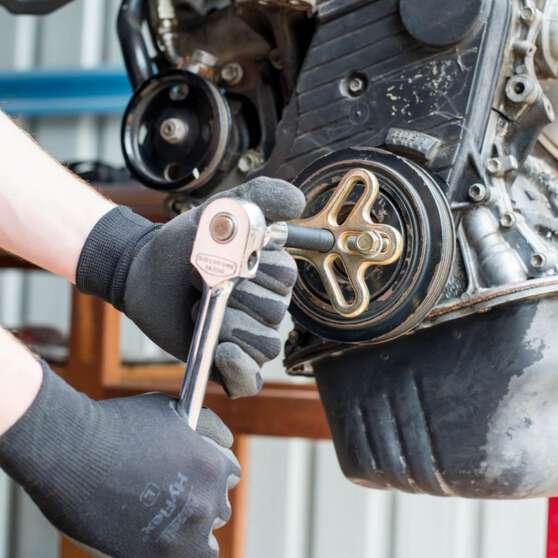
What Is a Harmonic Balancer Puller?
A harmonic balancer puller is a specialized engine service tool designed to remove crankshaft harmonic balancers, vibration dampers, and related pulley components.
Unlike general-purpose pullers, harmonic balancer pullers are designed specifically for:
Crankshaft pulley removal
Harmonic damper removal
Timing service operations
Engine rebuilding applications
The tool typically includes:
Puller body or crossbar
Pulling bolts or jaws
Center forcing screw
Adapters for different bolt patterns
During operation, the puller creates controlled pulling force while keeping the load centered on the crankshaft.
This prevents:
Side loading
Crankshaft damage
Pulley deformation
Unnecessary impact stress
Why Should You Use a Harmonic Balancer Puller?
The harmonic balancer is mounted tightly because it must transfer engine rotation while absorbing vibration.
Over time, removal becomes difficult because of:
Press-fit installation
Corrosion
Heat cycles
Long service periods
Carbon and oil contamination
Using incorrect removal methods may cause:
Crankshaft Damage
Hammering directly on the harmonic balancer can transfer shock loads into the crankshaft.
Possible results:
Damaged crankshaft threads
Shaft deformation
Alignment problems
Harmonic Balancer Damage
The harmonic balancer contains:
Outer metal ring
Rubber vibration isolator
Inner hub
Excessive impact force may damage the rubber layer and reduce vibration control performance.
Timing Component Damage
Improper removal may affect nearby:
Timing covers
Sensors
Sealing surfaces
A professional puller provides controlled extraction and reduces unnecessary stress.
Step-by-Step Guide: How to Remove a Harmonic Balancer
Step 1: Prepare the Vehicle and Tools
Before starting:
Disconnect the battery if required.
Confirm the correct service procedure.
Remove necessary covers or accessories.
Select the correct harmonic balancer puller.
Required tools may include:
Harmonic balancer puller
Socket set
Torque wrench
Protective equipment
Manufacturer-specific adapters
Choosing the correct puller is essential because different engines may use different bolt patterns and installation depths.
Step 2: Remove the Center Bolt
The crankshaft center bolt usually holds the harmonic balancer in position.
Before removal:
Lock the crankshaft according to manufacturer instructions.
Use the correct socket size.
Avoid damaging bolt heads.
Some engines use extremely high torque fasteners, requiring professional tools.
Step 3: Install the Harmonic Balancer Puller
Correct installation is the most important step.
Follow these procedures:
Position the Puller Correctly
Ensure:
Pulling points are evenly distributed.
The center screw aligns with the crankshaft center.
The puller sits flat against the component.
Incorrect positioning may cause:
Uneven force
Puller slipping
Component damage
Install Pulling Bolts or Jaws
Depending on the puller design:
Insert bolts into correct threaded holes.
Tighten evenly.
Confirm secure engagement.
Never use damaged bolts or incorrect fasteners.
Step 4: Apply Pulling Force Gradually
Once installed:
Turn the center forcing screw slowly.
Monitor movement.
Check alignment continuously.
Continue until the harmonic balancer separates.
Avoid:
Sudden impact
Excessive force
Uneven tightening
Controlled force protects the crankshaft and surrounding components.
Step 5: Inspect Components After Removal
After removing the harmonic balancer, inspect:
Harmonic Balancer Condition
Check for:
Cracks
Rubber separation
Excessive wear
Deformation
Crankshaft Surface
Check:
Keyway condition
Shaft surface damage
Corrosion
Oil Seal Area
Inspect for:
Leakage
Wear marks
Damage
Proper inspection helps prevent repeated repairs.
Step-by-Step Guide: How to Install a Harmonic Balancer
Removal is only half of the repair process. Correct installation is equally important.
Step 1: Clean the Crankshaft Surface
Before installation:
Remove rust
Clean debris
Inspect the keyway
Apply recommended lubricant if required
A clean surface ensures proper seating.
Step 2: Align the Harmonic Balancer
Make sure:
Keyway alignment is correct.
Component position matches manufacturer specifications.
The balancer sits straight.
Incorrect alignment can cause vibration and premature failure.
Step 3: Use the Correct Installation Tool
Many technicians make the mistake of using the crankshaft bolt to pull the harmonic balancer into position.
This can damage:
Crankshaft threads
Fasteners
Component alignment
A professional installation tool provides controlled pressing force.
Benefits:
Proper seating
Reduced thread stress
Better installation accuracy
Step 4: Tighten the Center Bolt According to Specification
Always follow manufacturer torque specifications.
Incorrect torque may cause:
Loose installation
Excessive stress
Component failure
Professional engine repairs require accurate torque control.
Common Mistakes When Using a Harmonic Balancer Puller
Using the Wrong Puller
A standard gear puller may not properly fit harmonic balancers.
Solution:
Use a dedicated harmonic balancer puller.
Pulling Unevenly
Uneven loading may damage the component.
Solution:
Ensure all pulling points are equally engaged.
Applying Impact Force
Hammering can damage precision engine components.
Solution:
Use controlled mechanical pulling force.
Ignoring Bolt Quality
Weak bolts may stretch or fail under load.
Solution:
Use high-strength fasteners designed for pulling applications.
Choosing the Right Harmonic Balancer Puller
When selecting a professional harmonic balancer puller, consider:
Compatibility
Check:
Bolt pattern
Thread size
Engine application
Pulling Capacity
The tool must handle:
Component size
Required extraction force
Material Quality
Professional tools should use:
Forged steel
Heat-treated components
Precision machining
Application Range
Universal kits are useful for:
Multiple vehicle applications
Repair workshops
Mobile mechanics
Vehicle-specific tools provide:
Better fit
Faster operation
Higher efficiency
Harmonic Balancer Puller Applications
Professional harmonic balancer pullers are used in:
Passenger Vehicle Repair
Applications:
Engine timing service
Crankshaft pulley removal
Front engine maintenance
Diesel Engine Repair
Applications:
Heavy-duty engines
Commercial vehicles
Fleet maintenance
Performance Engine Service
Applications:
Engine rebuilding
Crankshaft upgrades
Racing applications
Why Professional Mechanics Choose BY Harmonic Balancer Pullers
Professional engine repair requires tools that provide:
Accurate fit
Reliable pulling force
Long service life
Safe operation
BY (Baiyu Tools) develops and manufactures professional automotive specialty tools designed for real workshop applications.
BY product solutions include:
Harmonic balancer pullers
Engine timing tools
Gear pullers
Bearing pullers
Specialty automotive repair tools
With manufacturing experience, engineering capability, and OEM/ODM service support, BY works with:
Automotive repair workshops
Tool distributors
Automotive brands
Professional mechanics
BY focuses on creating tools that solve practical maintenance challenges, helping technicians reduce downtime and improve repair efficiency.
Learn more:
https://www.baiyutools.net/
Frequently Asked Questions
Can I remove a harmonic balancer without a puller?
Although some technicians attempt alternative methods, using a dedicated harmonic balancer puller is the safest approach because it prevents unnecessary damage to the crankshaft and engine components.
Is a harmonic balancer puller the same as a gear puller?
They work on similar principles, but harmonic balancer pullers are specifically designed for crankshaft pulleys and vibration dampers with specific mounting patterns.
Can a harmonic balancer puller damage the crankshaft?
A properly selected and correctly installed puller should not damage the crankshaft. Damage usually occurs from incorrect alignment, excessive force, or improper tools.
Why is installation as important as removal?
Incorrect installation can cause vibration, misalignment, and premature failure. Professional installation tools ensure the harmonic balancer is positioned correctly.
Conclusion
A harmonic balancer puller is an essential tool for professional engine repair because it allows technicians to remove and install crankshaft dampers safely and accurately.
Compared with hammering or improvised methods, a dedicated puller provides controlled force, protects expensive engine components, and improves repair efficiency.
For automotive workshops, engine specialists, and professional mechanics, choosing the right harmonic balancer puller reduces repair risks and improves service quality.
With professional automotive specialty tools from BY (Baiyu Tools), technicians and distributors worldwide can access reliable solutions designed for modern engine repair requirements.


