

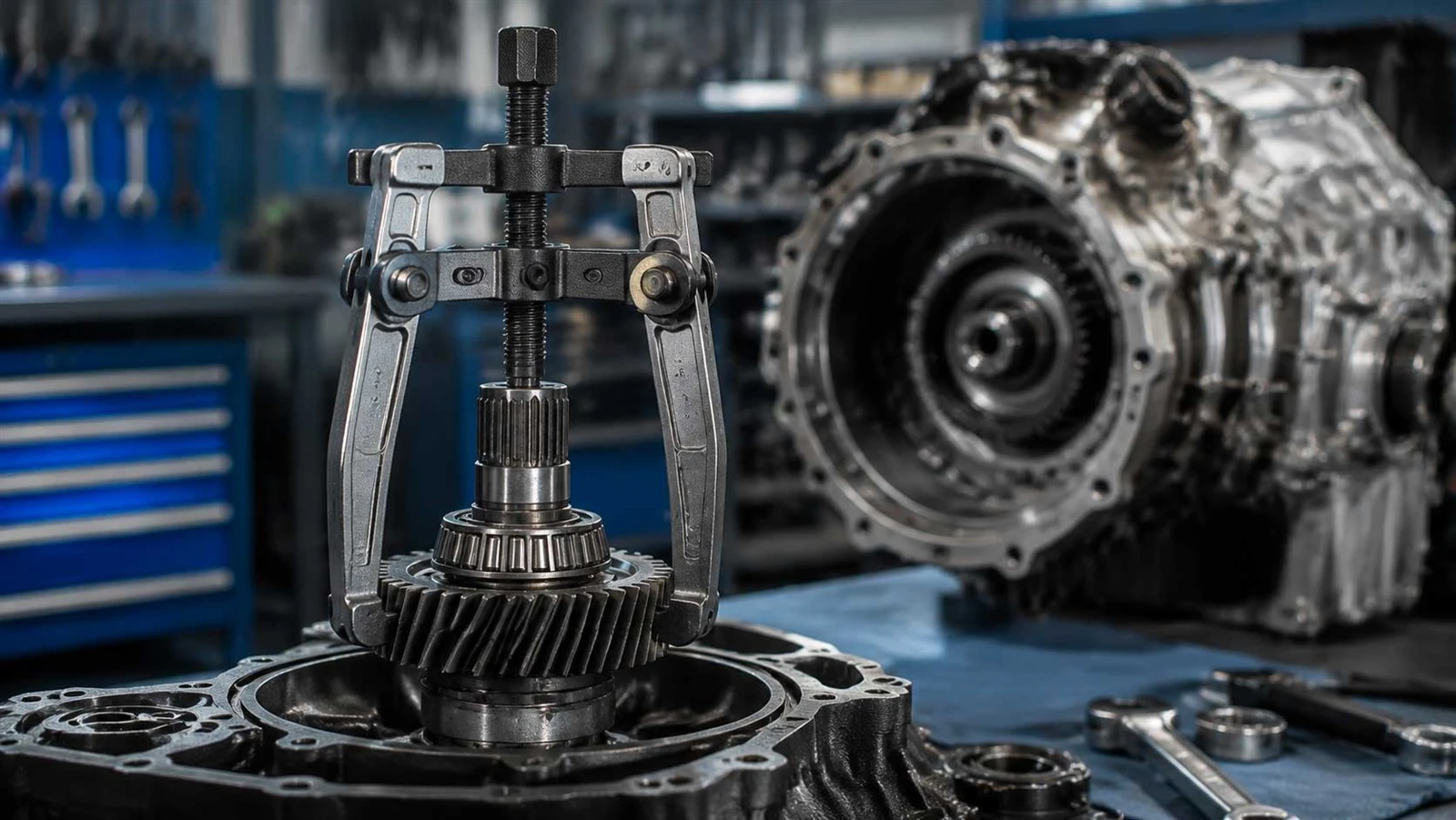
When removing gears, bearings, pulleys, or flywheels from a shaft, using excessive force with hammers or pry bars can easily damage expensive components. This is why professional mechanics rely on a gear puller-a specialized extraction tool designed to remove press-fitted parts safely and efficiently.
Whether you're repairing a passenger vehicle, rebuilding a commercial truck transmission, or maintaining industrial machinery, understanding how a gear puller works helps improve repair quality while reducing maintenance time.
At BY (Baiyu Tools), we have specialized in manufacturing professional automotive repair tools for more than two decades, supplying OEM and aftermarket customers worldwide with durable gear pullers, bearing pullers, and heavy-duty service tools. Our experience working with professional workshops has shown that choosing the correct puller is just as important as choosing the correct replacement part. (Ningbo Baiyu Tools Co.,Ltd)
What Is a Gear Puller?
A gear puller is a mechanical extraction tool designed to remove components that are tightly fitted onto a shaft through interference or press-fit installation.
Instead of applying uncontrolled impact force, a gear puller generates controlled axial pulling force, allowing the component to be removed without damaging either the shaft or the gear itself.
Gear pullers are commonly used to remove:
Gears
Bearings
Pulleys
Bushings
Flywheels
Couplings
Timing gears
Sprockets
These tools are widely used in:
Automotive repair
Heavy truck maintenance
Gearbox rebuilding
Industrial equipment service
Agricultural machinery
Manufacturing plants
How Does a Gear Puller Work?
Although gear pullers come in different designs, most mechanical pullers operate using the same basic principle.
The puller consists of three primary components:
Pulling jaws
Cross beam or yoke
Center forcing screw
The jaws grip the backside of the component while the forcing screw presses against the center of the shaft.
As the technician tightens the forcing screw, rotational torque is converted into linear pulling force. The screw pushes inward while the jaws pull outward, gradually overcoming the friction created by the press fit until the component slides off the shaft in a controlled manner. (Engineer Fix)
This balanced pulling action minimizes stress on both the shaft and the removed component.
Common Types of Gear Pullers
Choosing the right puller depends on the available working space and the component being removed.
Two-Jaw Gear Puller
Two-jaw pullers are ideal when working in confined spaces.
Advantages include:
Compact design
Easy access
Lightweight
Suitable for limited clearance
Best applications:
Small pulleys
Compact engine compartments
Steering components
Three-Jaw Gear Puller
Three-jaw pullers distribute force more evenly across the component.
Advantages include:
Better stability
Reduced slipping
More balanced pulling force
Higher pulling capacity
These are often the preferred choice for professional workshops because the three-point contact helps reduce uneven loading. (www.nbdntools.com)
Hydraulic Gear Puller
Hydraulic pullers use hydraulic pressure rather than manual screw force.
Advantages include:
Extremely high pulling force
Less operator effort
Faster extraction
Ideal for seized components
Hydraulic gear pullers are widely used for heavy-duty truck maintenance, industrial machinery, and large bearings where manual pullers may not provide sufficient extraction force. (www.nbdntools.com)
Why Using the Correct Gear Puller Matters
Attempting to remove a gear using incorrect methods often results in:
Bent shafts
Damaged gear teeth
Broken bearings
Cracked housings
Personal injury
A properly selected gear puller provides:
Even force distribution
Better alignment
Reduced component damage
Faster repairs
Improved workshop safety
For professional technicians, the correct puller is an investment that protects both expensive components and valuable labor time.
Applications Across Automotive and Heavy-Duty Repair
Gear pullers are not limited to gears alone. In professional workshops they are routinely used for:
Engine Repair
Timing gears
Crankshaft gears
Camshaft gears
Transmission Service
Transmission gears
Bearings
Synchronizer hubs
Wheel Hub Maintenance
Bearings
Hubs
Axle components
Heavy-Duty Truck Repair
Commercial truck transmissions
Differential assemblies
PTO systems
Industrial Equipment
Pumps
Electric motors
Conveyor systems
Gear reducers
How to Choose the Right Gear Puller
Before purchasing a gear puller, consider the following factors:
Component size
Pulling capacity
Available working space
Two-jaw or three-jaw design
Mechanical or hydraulic operation
Material quality
Heat treatment
Replaceable components
Professional workshops often maintain multiple pullers to accommodate different applications.
Why Professionals Choose BY Gear Pullers
Professional repair shops require tools that perform reliably under repeated daily use.
BY (Baiyu Tools) manufactures a comprehensive range of gear pullers designed for automotive and industrial maintenance, including:
Two-jaw gear pullers
Three-jaw gear pullers
Bearing pullers
Gear separator sets
Hydraulic pullers
Customized OEM solutions
Manufactured from high-quality alloy steel and produced under strict quality control, BY gear pullers are designed to deliver stable pulling force, long service life, and dependable performance in demanding workshop environments. The company also provides OEM and ODM services for distributors and tool brands worldwide. (Ningbo Baiyu Tools Co.,Ltd)
Learn more about BY's gear puller solutions:
https://www.baiyutools.net/
Frequently Asked Questions
Can a gear puller remove bearings?
Yes. Many gear pullers are suitable for removing bearings, pulleys, hubs, and other press-fit components, depending on the jaw design and available clearance. (Engineer Fix)
Is a three-jaw puller better than a two-jaw puller?
A three-jaw puller generally provides more balanced force distribution and greater stability, while a two-jaw puller is preferred when access is limited. (www.nbdntools.com)
When should I choose a hydraulic gear puller?
Hydraulic gear pullers are recommended when removing large or seized components that require substantially higher extraction force than manual pullers can provide. (www.nbdntools.com)
Conclusion
A gear puller is one of the most important tools in professional mechanical maintenance. By applying controlled pulling force instead of impact, it safely removes gears, bearings, pulleys, and other press-fit components while protecting surrounding parts.
Whether servicing passenger vehicles, commercial trucks, or industrial machinery, selecting the correct puller improves repair efficiency, extends component life, and enhances workplace safety.
With decades of manufacturing experience, BY (Baiyu Tools) continues to support professional mechanics, distributors, and OEM partners worldwide by delivering reliable gear pullers and automotive service tools designed for demanding applications.


