

When it comes to automotive suspension repair, removing or installing a ball joint is one of the most demanding tasks. Mechanics and workshop owners often face the decision: should I invest in a hydraulic ball joint press or stick with a manual/impact-based press?
This guide breaks down the differences, highlighting efficiency, safety, and long-term value. With over 20 years of expertise in manufacturing automotive specialty tools, Baiyu Tools provides insights that help mechanics, distributors, and tool brands choose the right solution.
1. The Basics: What Is a Ball Joint Press?
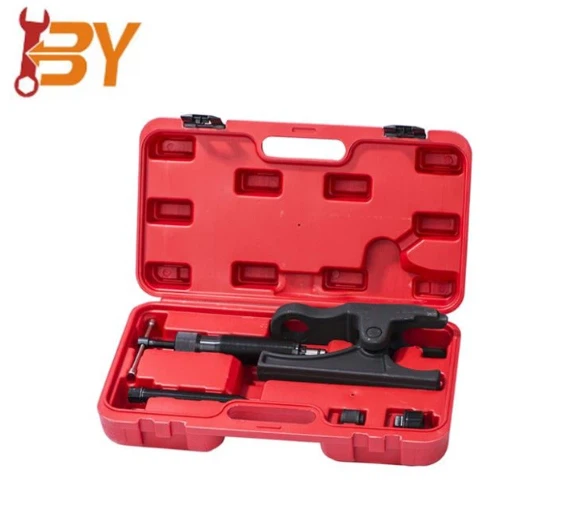
A ball joint press is a C-frame tool designed to press ball joints in and out of a vehicle's control arm. Traditionally, mechanics relied on manual presses or even hammers to remove stubborn joints. Hydraulic presses now offer a modern upgrade, reducing labor and increasing precision.
2. Hydraulic Ball Joint Press: Advantages
Hydraulic technology transforms the ball joint removal process by using fluid pressure instead of muscle power.
Efficiency: A hydraulic press can reduce working time by up to 50%. For busy workshops, faster repairs mean more throughput.
Precision: Controlled force prevents damage to surrounding components, a risk with hammers or impact tools.
Safety: Less physical strain reduces the chance of injury, especially during repetitive heavy-duty repairs.
Versatility: With the right adapters, hydraulic presses can also handle wheel bearings, U-joints, and bushings.
Baiyu Tools offers hydraulic ball joint press kits designed with forged steel frames, CNC-machined adapters, and long service life, making them ideal for professional mechanics and fleet service stations.
3. Manual and Impact Tools: When Do They Work Best?
Manual presses remain popular for light-duty or occasional use.
Lower upfront cost: Manual ball joint presses are cheaper, making them attractive for DIY users.
Simplicity: No hydraulic system means less maintenance.
Portability: Lightweight and easy to carry to different job sites.
However, in high-volume workshops, repeated hammering or manual force slows down workflow and risks component misalignment.
4. Side-by-Side Comparison
| Feature | Manual/Impact Tools | Hydraulic Tools |
|---|---|---|
| Cost | Lower upfront | Higher upfront, lower long-term labor costs |
| Efficiency | Moderate | High (faster, smoother) |
| Precision | Basic, prone to errors | High, controlled pressure |
| Safety | Requires physical force | Reduces strain and accidents |
| Best For | DIY, low-frequency use | Professional workshops, heavy-duty repairs |
5. Long-Term Value for Workshops
For professional shops, time is money. Hydraulic presses may cost more initially, but their efficiency and durability result in a higher return on investment. A single day of increased throughput often offsets the price difference.
Baiyu Tools specializes in OEM and ODM solutions for global distributors and tool brands. With over 500 models of professional automotive repair tools-including suspension, braking, and transmission service kits-we provide mechanics worldwide with reliable, labor-saving solutions.
6. Final Thoughts
Choosing between a manual and hydraulic ball joint press depends on your needs.
If you're a DIY user or small shop, a manual press can be sufficient.
If you're a professional mechanic, tool distributor, or fleet repair workshop, a hydraulic press is the smarter choice for efficiency, safety, and long-term reliability.
At Baiyu Tools, we believe that durable tools protect mechanics and vehicles alike. That's why we design and manufacture high-quality hydraulic ball joint press kits tailored for heavy use in both passenger cars and heavy trucks.


