


Common Engine Valve Repair Tools Every Mechanic Should Know
Engine valve repair is one of the most precise jobs in engine maintenance. Whether a mechanic is replacing worn valve stem seals, rebuilding a cylinder head, servicing valve springs, or restoring valve sealing surfaces, the correct tools are essential. Engine valves operate in a high-temperature, high-pressure environment, and even small errors during service can lead to compression loss, oil burning, poor idle quality, or long-term engine damage.
That is why professional mechanics do not rely on general hand tools when working on valves. Instead, they use specialized engine valve repair tools designed to control spring pressure, protect delicate sealing parts, and improve service accuracy. For automotive workshops, engine rebuild shops, and heavy-duty maintenance teams, understanding the most common valve repair tools is important for both repair quality and work efficiency.
Why Specialized Valve Repair Tools Matter
Engine valve components are compact, highly stressed, and closely fitted. Valve springs store significant tension, valve stem seals are easy to damage during installation, and valve faces must seat correctly to maintain cylinder compression. Because of this, using incorrect or improvised tools increases the risk of parts damage and poor repair results.
Typical Valve Repair Tasks That Require Special Tools
- Removing and reinstalling valve springs
- Replacing valve stem seals
- Refacing or lapping valves
- Servicing retainers and keepers
- Inspecting valve seating surfaces
- Reassembling the cylinder head after repair
Valve Spring Compressor
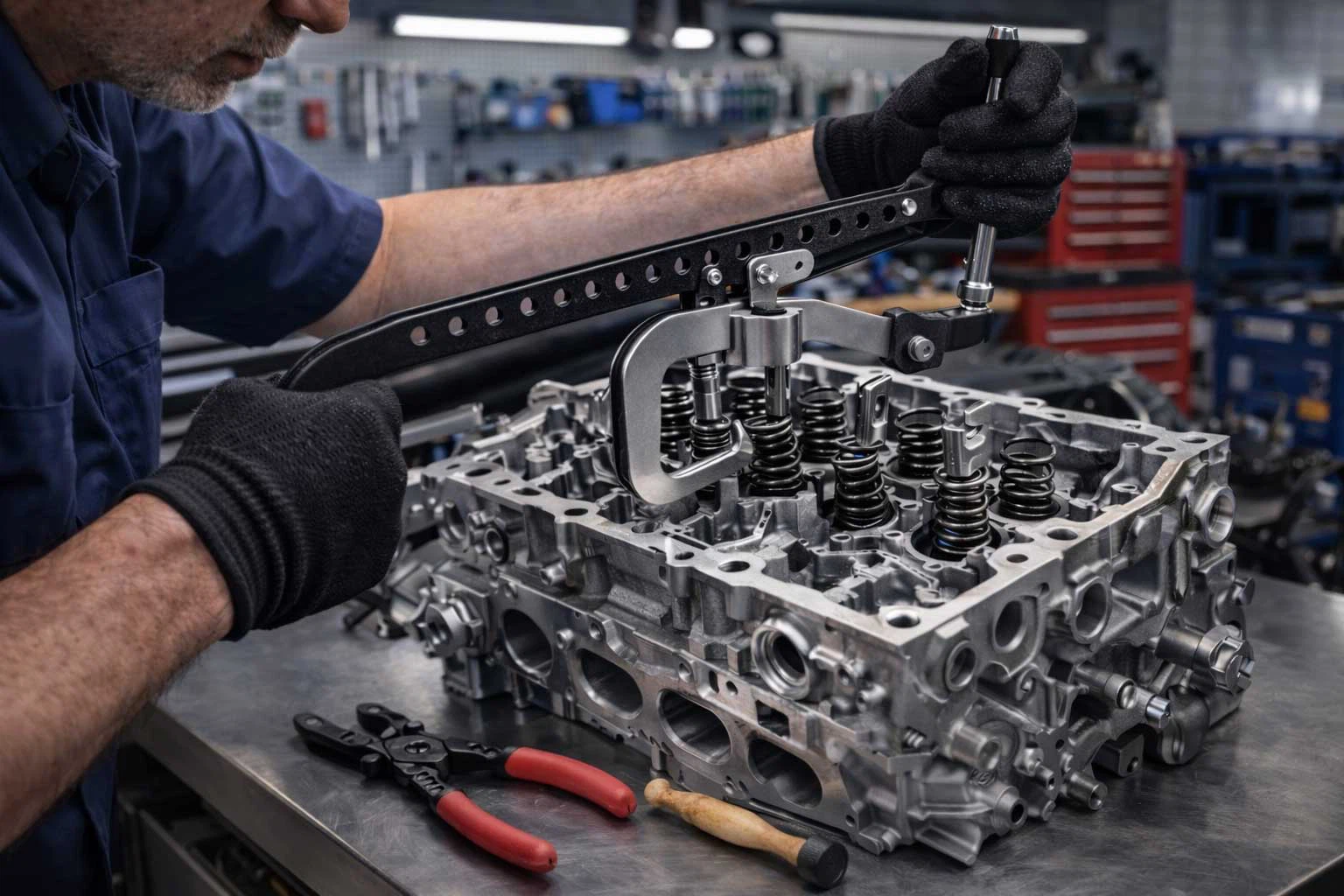
The valve spring compressor is the most widely recognized engine valve repair tool. Its main function is to compress the valve spring so that the valve keepers can be removed or installed safely. This tool is used during cylinder head rebuilds, valve seal replacement, and spring replacement procedures.
Why Mechanics Need It
Without a valve spring compressor, removing valve keepers is difficult and unsafe because valve springs hold substantial stored force. The tool applies controlled compression and allows precise access to the retainer area.
Common Workshop Use
- Cylinder head rebuilding
- Valve stem seal replacement
- Broken spring replacement
- High-performance valve spring upgrades
Valve Keeper Removal and Installation Tools
Valve keepers are small locking pieces that secure the retainer to the valve stem. Because they are tiny and often coated with oil or carbon residue, handling them can be difficult during disassembly and installation.
Why They Matter
Using proper keeper tools reduces the risk of dropping keepers into the engine or misinstalling them during reassembly. In busy workshops, this helps improve speed and consistency.
Valve Stem Seal Pliers and Seal Installers
Valve stem seals control the amount of oil that reaches the valve guides. When seals wear out, the engine may burn oil, produce blue smoke, or foul spark plugs. Removing old seals and installing new ones requires dedicated tools to avoid damaging the guide or the new seal.
Seal Removal Tools
These plier-style tools grip the old seal firmly and help extract it without distorting surrounding components.
Seal Installer Tools
Installer sleeves or seal drivers help press the new seal into place evenly, reducing the chance of tearing or deforming it.
Valve Lapping Tool
A valve lapping tool is used to improve the sealing contact between the valve face and the valve seat. This is especially useful when rebuilding a cylinder head or restoring sealing surfaces after wear.
Why Lapping Is Important
- Compression loss
- Misfires
- Rough idle
- Reduced fuel efficiency
Lapping helps ensure the valve seals properly against the seat before final assembly.
Valve Seat Cutters and Related Service Tools
In more advanced engine rebuilding, mechanics may need to restore or reshape the valve seat itself. This is where valve seat cutters or seat service tools become important. These are commonly used in machine shops and engine rebuilding facilities rather than in basic repair garages.
Typical Use Cases
- Reconditioning worn seats
- Correcting sealing angle issues
- Preparing cylinder heads for new valves
Camshaft and Crankshaft Holding Tools in Valve Service
Although they are often associated with timing work, camshaft and crankshaft tools also matter during many valve repair procedures, especially on overhead-cam engines where the valve train and timing components are closely linked.
Why They Are Relevant
When a mechanic removes camshafts during valve service, holding and alignment tools help preserve timing position and support safe reassembly.
Choosing the Right Valve Repair Tools
Not every workshop needs the same tool level. A general repair garage may mainly require a valve spring compressor, valve stem seal pliers, seal installer, and a basic valve lapping tool. An engine rebuild shop may also need seat cutting tools, advanced spring compressors, precision measuring tools, and engine-specific valve service adapters.
Conclusion
Engine valve repair requires more than mechanical skill. It also requires the right tools. Among the most important engine valve repair tools every mechanic should know are the valve spring compressor, valve keeper tools, valve stem seal pliers, seal installers, and valve lapping tools. These tools improve safety, reduce repair errors, and help restore correct valve sealing and engine performance.
For professional mechanics, using the right valve tools is not only about convenience. It is a direct part of delivering accurate, repeatable, and reliable engine repair results.


