


Step-by-Step Guide to Using a Valve Spring Compressor Tool
A valve spring compressor tool is one of the most important tools used during engine cylinder-head service and engine rebuilding. This tool compresses the valve spring so the valve retainers or keepers can be removed, allowing the valve and related components to be serviced or replaced. Proper use of this tool ensures safe disassembly and prevents damage to the valve train components.
In modern internal combustion engines, intake and exhaust valves are held tightly in place by strong springs designed to withstand high temperatures and repeated movement. Because these springs are under significant tension, attempting to remove them without the correct tool can be dangerous.
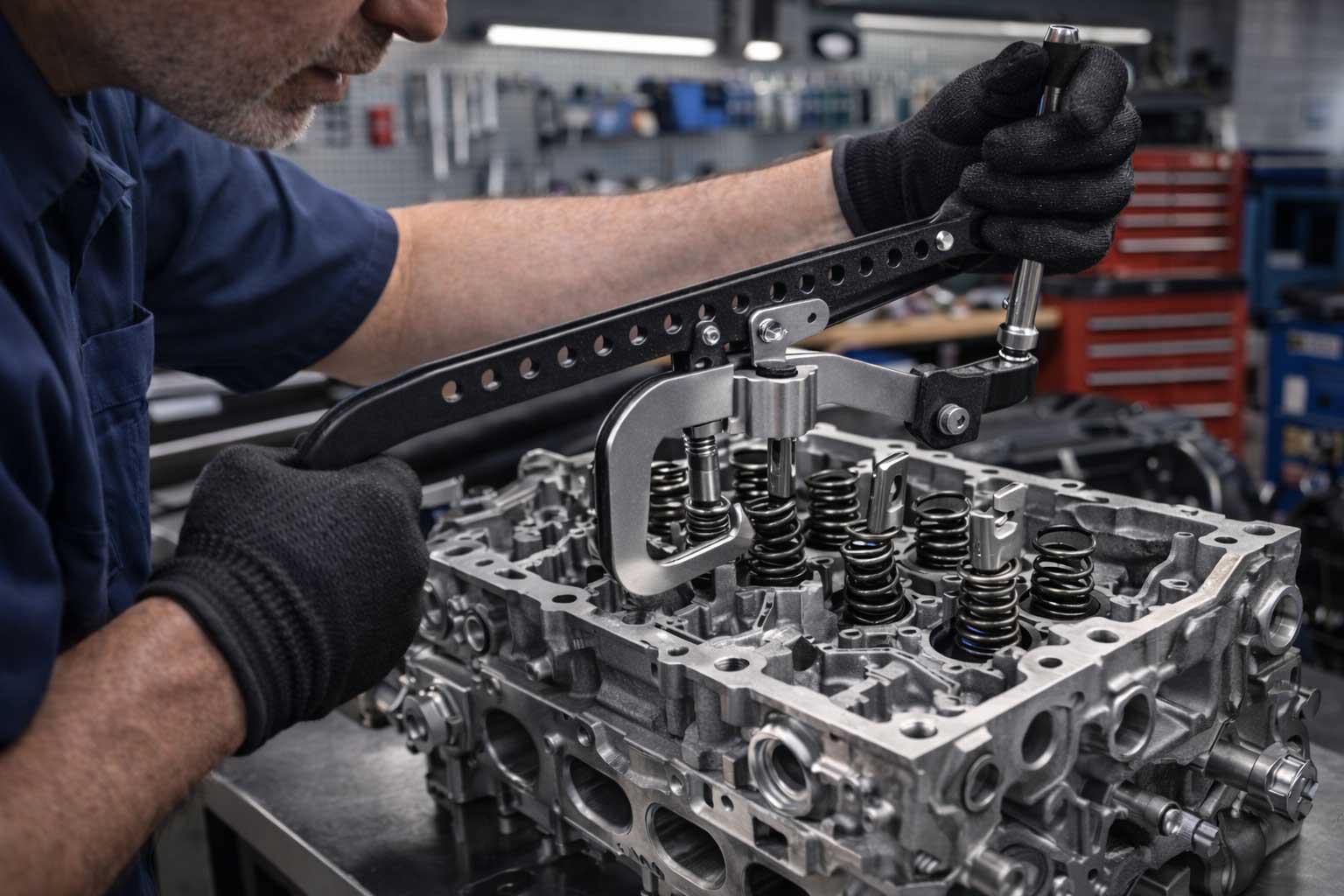
Understanding the Valve Spring Assembly
The valve assembly includes the valve spring, retainer, valve keepers, valve stem, and valve guide. The spring holds the valve closed during engine operation, and must be compressed before the valve can be removed.
Why Controlled Compression Is Important
Valve springs are strong components that can release energy quickly if not controlled. A compressor tool ensures the spring can be compressed and released safely.
Step 1 - Prepare the Cylinder Head
Remove the valve cover and any components that block access to the valves, such as rocker arms or camshafts.
Supporting the Valve
Use compressed air or nylon rope inserted into the cylinder to prevent the valve from dropping when the spring is removed.
Step 2 - Position the Valve Spring Compressor
Place the compressor so one end presses against the valve retainer while the other end anchors against the cylinder head.
Adjust the Tool
Adjust the compressor jaws to match the valve spring size and ensure the tool is centered.
Step 3 - Compress the Valve Spring
Slowly compress the spring until the valve keepers become visible. Remove them carefully using a magnet or small pliers.
Step 4 - Remove the Valve Spring and Retainer
Release the compressor slowly and remove the retainer and spring. The valve can then be removed through the valve guide.
Organizing Valve Components
Label and organize valve components so they can be returned to their original positions.
Step 5 - Reinstalling the Valve Components
Reinstallation is the reverse process: insert the valve, place the spring and retainer, compress the spring, reinstall keepers, and release the compressor.
Safety Tips
- Wear safety glasses
- Compress the spring slowly
- Ensure the tool is properly positioned
- Keep small parts organized
Conclusion
Using a valve spring compressor tool correctly ensures safe and efficient valve service. Following a structured procedure allows technicians to remove and install valve components while protecting the engine and maintaining proper performance.


