


The crankshaft is one of the most expensive and critical components inside any engine. Whether you're working on a passenger vehicle, a high-performance V8, a diesel pickup, or a heavy-duty commercial truck, damage to the crankshaft can quickly turn a routine repair into a major engine overhaul.
One of the most common situations where crankshaft damage occurs is during harmonic balancer removal. Many technicians underestimate how tightly a harmonic balancer is mounted to the crankshaft and attempt removal using pry bars, hammers, or generic pullers. While these methods may occasionally work, they often place excessive stress on the crankshaft, resulting in damaged threads, worn keyways, bent snouts, or seal failures.
This is why professional mechanics rely on harmonic balancer pullers.
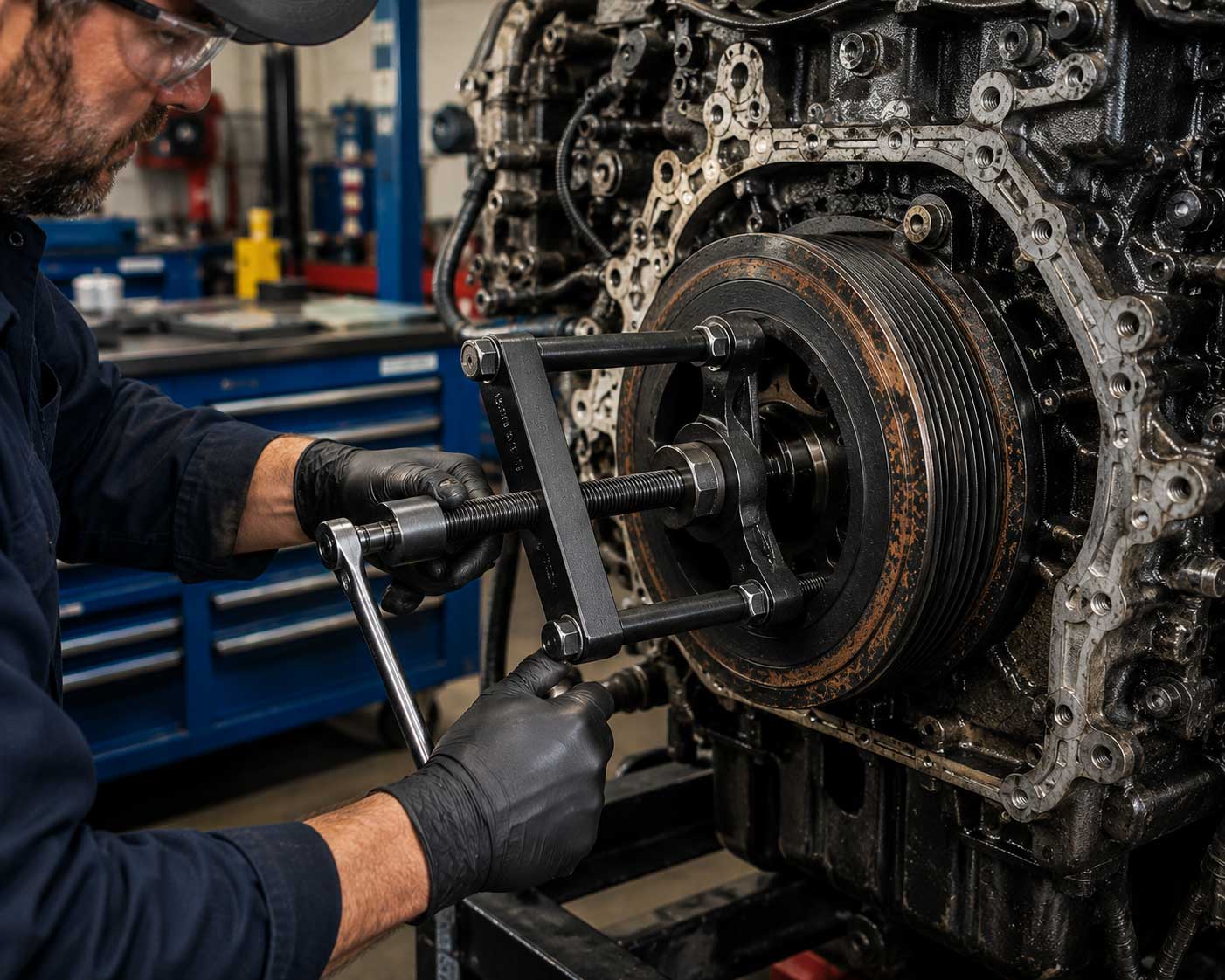
A harmonic balancer puller is specifically engineered to remove crankshaft dampers safely by applying controlled and evenly distributed force. Instead of pulling from the outer edge of the balancer, it works directly through the balancer's mounting points and along the crankshaft centerline, dramatically reducing the risk of damage. Proper puller design ensures even pressure around the balancer during removal and helps protect the crankshaft and surrounding engine components.
Understanding the Role of the Crankshaft
Before discussing pullers, it is important to understand why crankshaft protection matters.
The crankshaft converts the linear motion of the pistons into rotational power. Every combustion event inside the engine applies force directly to the crankshaft journals. During operation, the crankshaft experiences:
- Continuous torsional load
- Rotational stress
- Harmonic vibration
- Heat cycling
- Bearing pressure
Modern engines rely on precise crankshaft geometry to maintain balance and durability.
Even minor damage can lead to:
- Oil leaks
- Bearing wear
- Timing inaccuracies
- Excessive vibration
- Premature engine failure
Because of this, any repair procedure involving the crankshaft must be performed carefully.
Why Harmonic Balancers Are So Difficult to Remove
A harmonic balancer is mounted on the front of the crankshaft using an interference fit. This means the balancer is intentionally installed with extremely tight tolerances so that it rotates perfectly with the crankshaft and can effectively control torsional vibration. Harmonic dampers are designed specifically to reduce crankshaft harmonics and resonance that could otherwise shorten crankshaft life or even cause cracking under certain conditions.
Over time, several factors make removal more difficult:
- Corrosion
- Rust buildup
- Thermal expansion cycles
- High installation torque
- Long-term vibration
On heavy-duty diesel engines, the balancer is often larger and installed with greater force than on passenger vehicles.
This creates a situation where substantial pulling force is required to remove the component safely.
What Causes Crankshaft Damage During Balancer Removal?
Most crankshaft damage occurs because force is applied incorrectly.
Common causes include:
Using Pry Bars
Prying against the timing cover or crankshaft area may:
- Score sealing surfaces
- Damage oil seals
- Bend pulley assemblies
- Distort crankshaft alignment
Hammering the Balancer
Impact force travels directly through the crankshaft.
This can damage:
- Main bearings
- Thrust bearings
- Keyways
- Crankshaft snout
Using Incorrect Pullers
Generic pullers often apply force unevenly.
This may result in:
- Side loading
- Crankshaft thread damage
- Balancer distortion
- Misalignment
The most common failures occur when technicians attempt to save time by using tools not specifically designed for harmonic balancer removal.
How a Harmonic Balancer Puller Works
A harmonic balancer puller is designed differently from standard pullers.
The system typically includes:
- Puller plate
- Mounting bolts
- Center forcing screw
- Adapters
The puller bolts attach directly to the harmonic balancer's threaded holes.
The forcing screw then pushes against the crankshaft center while the puller plate applies equal pulling force around the balancer.
As the forcing screw is tightened:
- Pressure remains centered
- Force stays aligned with the crankshaft axis
- The balancer moves outward evenly
- Side loading is minimized
This controlled removal process protects both the balancer and the crankshaft. Puller bolts and forcing screws are designed to apply even pressure around the balancer during removal, reducing the chance of crankshaft damage.
Protecting Crankshaft Threads
One of the most common crankshaft failures occurs at the threaded section in the crankshaft snout.
These threads are used for:
- Crankshaft bolts
- Harmonic balancer retention
- Installation tools
Damage can occur when:
- Improper forcing screws are used
- Pullers become misaligned
- Excessive force is applied
A dedicated harmonic balancer puller protects the threads by ensuring that force is distributed correctly through the puller assembly instead of concentrating stress on the threaded area.
Many professional puller kits also include protective adapters that sit between the forcing screw and the crankshaft center.
These adapters help prevent:
- Thread deformation
- Surface gouging
- Crankshaft snout damage
Preventing Keyway Damage
Many crankshafts use a keyway to maintain alignment between the crankshaft and harmonic balancer.
The keyway is critical because it ensures:
- Accurate pulley alignment
- Proper timing reference
- Secure balancer positioning
When force is applied unevenly, the keyway may become:
- Rounded
- Distorted
- Cracked
- Worn
Repairing a damaged crankshaft keyway can be expensive and time-consuming.
Because a harmonic balancer puller applies force directly along the crankshaft centerline, it significantly reduces stress on the keyway area.
Protecting the Crankshaft Snout
The crankshaft snout is the front section of the crankshaft where the harmonic balancer mounts.
This area is particularly vulnerable during removal.
Improper techniques may cause:
- Surface scoring
- Bending
- Wear marks
- Installation issues
Once damaged, the crankshaft may no longer provide proper support for the balancer.
A harmonic balancer puller protects the snout by maintaining straight-line pulling force throughout the removal process.
Reducing Side Loading
Side loading is one of the biggest threats to crankshaft integrity.
It occurs when force is applied at an angle rather than directly along the crankshaft axis.
Common causes include:
- Jaw pullers
- Pry bars
- Uneven puller installation
- Misaligned tools
Side loading can damage:
- Bearings
- Crankshaft surfaces
- Keyways
- Seals
Dedicated harmonic balancer pullers eliminate most side-loading forces because they remain centered throughout removal.
Protecting Front Crankshaft Seals
The front crankshaft seal is located directly behind the harmonic balancer.
Seal damage often occurs when technicians:
- Pry against the timing cover
- Hammer the balancer
- Use misaligned pullers
A damaged seal may lead to:
- Oil leaks
- Contamination
- Reduced engine reliability
By controlling removal force and maintaining alignment, harmonic balancer pullers help preserve seal integrity.
Why Diesel Engines Require Extra Care
Heavy-duty diesel engines present additional challenges.
Diesel harmonic balancers are often:
- Larger
- Heavier
- More tightly fitted
- Exposed to harsher environments
Years of vibration, corrosion, and heat cycles can make removal extremely difficult.
In commercial truck repair, improper removal techniques can result in:
- Costly downtime
- Expensive crankshaft repairs
- Fleet maintenance delays
For this reason, professional diesel technicians almost always use dedicated puller systems.
Common Mistakes That Lead to Crankshaft Damage
Even experienced mechanics can make mistakes.
The most common include:
Using a 3-Jaw Puller
While useful for many applications, a 3-jaw puller applies force from the outside edge of the balancer and can introduce unwanted side loading.
Hammering the Balancer
Impact force is rarely necessary and often causes more harm than good.
Pulling at an Angle
Misalignment dramatically increases stress on the crankshaft.
Using Incorrect Hardware
Wrong bolts may strip threads or fail under load.
Avoiding these mistakes significantly reduces repair risk.
Benefits for Professional Workshops
A quality harmonic balancer puller provides several advantages:
- Faster repairs
- Reduced crankshaft damage
- Improved technician safety
- Better repair consistency
- Lower warranty risk
- Increased workshop efficiency
For shops performing regular timing chain service, engine rebuilding, or diesel maintenance, a dedicated puller quickly becomes one of the most valuable specialty tools available.
Conclusion
The crankshaft is too important-and too expensive-to risk damaging during harmonic balancer removal.
Because harmonic balancers are installed with an interference fit and often become seized after years of service, significant force is required to remove them. The key is applying that force correctly.
A harmonic balancer puller prevents crankshaft damage by keeping pulling force centered, evenly distributed, and aligned with the crankshaft axis. It protects crankshaft threads, keyways, snouts, seals, and surrounding engine components while making removal faster and safer.
Whether you're servicing a passenger vehicle, rebuilding a performance engine, or maintaining a fleet of heavy-duty trucks, using a dedicated harmonic balancer puller is one of the simplest ways to protect critical engine components and ensure professional repair results.


